
Emax vs porcelain veneers
December 12, 2024
Considering your different veneer options?
While the internet can be a wonderful resource for dental treatments, it can also lead to further confusion as you try to figure out the difference in veneer types, as well as the pros and cons of each.
So, if you are considering Emax vs porcelain veneers, our handy guide can fill you in!

What are veneers?
A less invasive treatment option than crowns, dental veneers are thin shells or discs of either porcelain or ceramics that are securely bonded to the front of teeth.
This treatment option is designed to improve the appearance of teeth that are functionally healthy but may not be as even, straight, or white as the patient prefers.
As such, veneers are used to improve teeth that are:
- Wonky, crooked, or misaligned
- Unevenly spaced – with instances of gapping or overlapping
- Cracked, chipped, worn down, or physically damaged in some way
- Overly large or very narrow/small and appear out of balance
- Discoloured or badly stained past the point where whitening treatments can help
The surface of the tooth is filed lightly to remove some enamel, a bonding cement or glue is used to adhere the veneer, and this is then cured with UV light. As a result, veneers can last for 5-10 years (or more) with care and attention.

Emax vs porcelain veneers – what’s the difference?
The biggest difference in veneer types is generally what they are made from, how the teeth are prepared for adherence, and the expected lifespan of the veneer itself.
Emax veneers London-wide are made of ultra-durable porcelain called lithium disilicate – which is regarded to be stronger than traditional porcelain and ceramic veneers.

Benefits of Emax veneers
With a range of possible benefits, a patient chooses Emax veneers over porcelain or ceramic options as they offer:
- A more natural-looking smile – thanks to shade customisation
- Increased stain resistance
- Less chance of chipping – as they are very thin
- Only a small amount of tooth surface is removed
- Stronger bonding – the lithium disilicate material makes the bond between the tooth and the veneer stronger
- Lifespan of 15-20 years or more
It is worth noting that Emax veneers can be more expensive than other veneer counterparts.
Porcelain veneers, on the other hand, use dental porcelain to create thin mouldings for the teeth and are the most popular option in the UK.
So which veneers are right for me?
As both veneers are milled bespoke from dental porcelain, they have some general similarities.
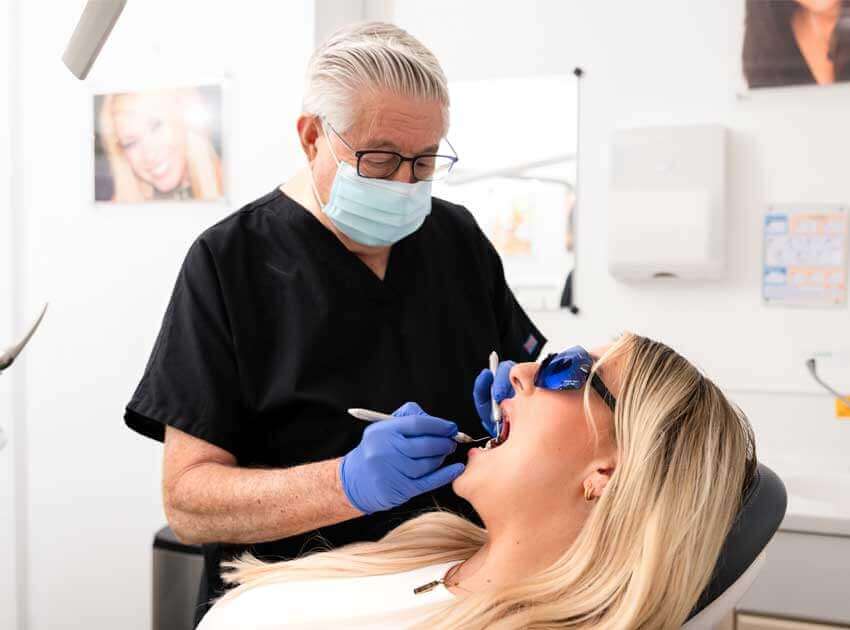
If you are unable to or would prefer to speak to an expert before deciding, why not book an appointment with our porcelain veneer experts?
Dr Mervyn Druian, our lead dentist, introduced porcelain veneers to the UK from America in 1983, so now has over 40 years of experience with a range of both porcelain and composite veneers.
With this experience, a dedication to bespoke and innovative patient care, and a handy location in Belsize Park with plentiful tube connections – surely your new smile deserves the best?
If you want to know more or need to clarify something specific, you can call us on 0207 722 1235 or fill in our contact form and our team will get back to you as soon as they.
Or, you can book a veneer consultation to come and see our experienced dentists in person, using our online booking portal!
